If your concrete driveway has narrow cracks, a few chipped edges or one sunken section on an otherwise solid slab, a repair is usually enough. If the surface is worn, stained or flaking but the slab underneath is sound and level, resurfacing gives it a new finish for less than a new driveway. Replacement makes sense when the problem is below the surface: wide or shifting cracks across many sections, slabs that keep moving, or a base that has washed out or failed. The question to settle first is whether the damage is on top of the concrete or under it.
Start With One Question: Is the Base Still Sound?
Most driveway problems are visible on the surface, but the cause sits under it. Concrete is only as stable as the ground it rests on, and in Austin that ground often moves.
Much of the area, especially the east side and the Blackland Prairie suburbs, sits on expansive clay that swells after heavy rain and shrinks during long dry spells. When the soil under a slab moves unevenly, sections crack, tilt or drop. If that movement is ongoing, no surface fix will hold for long.
Signs the base is still sound: sections sit level with each other, cracks are narrow and not growing, and water drains off without pooling. Signs it is not: sections rocking or tilting, gaps opening under the edges, cracks that have widened since last year, and soil washing out from beneath the slab after storms.
What Each Option Fixes
| Problem you see | Usually fixed by | When to choose something bigger |
|---|---|---|
| Hairline or narrow cracks | Crack filling and sealing | Cracks keep widening or one side sits higher than the other |
| Chipped or broken edges | Edge repair, sometimes a small re-pour | Edges crumble along most of the driveway |
| One sunken or tilted section | Slab lifting or replacing that section | Several sections are moving at once |
| Flaking, pitting or a worn, stained surface | Resurfacing overlay | The slab under the surface is also cracking and moving |
| Water pooling on the slab | Drainage fix plus repair | The base has already washed out |
| Many wide cracks, heaving and settling | Full replacement | This is already the bigger option |
When a Repair Is Enough
A repair is the right call when the damage is limited and the slab is stable. Narrow cracks can be cleaned out and filled with a flexible sealant, which keeps water from getting under the slab and making things worse. Chipped edges and small broken corners can be patched or cut back and re-poured.
A single sunken section can often be raised back into place by pumping material under it, or cut out and re-poured if it is badly broken. Our driveway repair page covers crack filling, slab leveling and the other repair methods in more detail.
The catch is timing. A repair done while the problem is small costs far less than the replacement it can prevent. A crack left open through a few seasons of Austin storms lets water reach the base, and that is how a repair job turns into a replacement job.
When Resurfacing Makes Sense
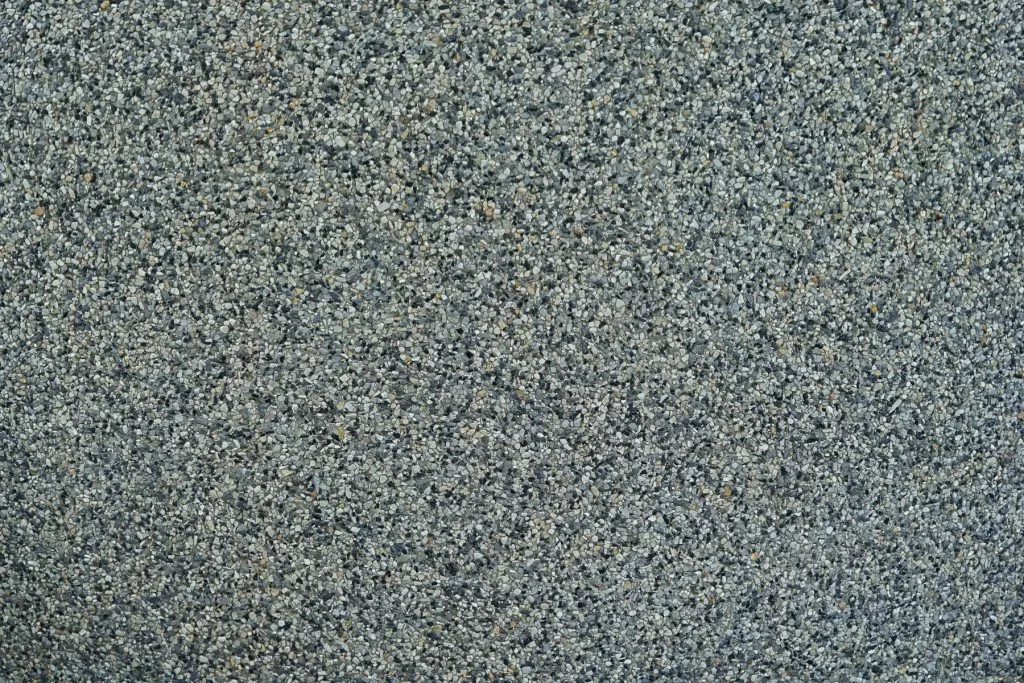
Resurfacing, also called an overlay, bonds a thin new layer of cement-based material over the existing driveway. It covers surface wear: flaking, pitting, faded color, old stains and the rough texture that shows up after years of sun and traffic.
It works when the slab under it is solid and level. If sections are moving, the cracks underneath come back through the overlay, sometimes within months. So before any resurfacing, the existing cracks have to be repaired and any loose or broken areas fixed.
Resurfacing also opens up design options. An overlay can be colored or stamped to give a plain broom-finish driveway a new look without tearing it out. See concrete resurfacing for the finishes and how the process works.
When Replacement Is the Better Value
Replacement is the right answer when the problem is the foundation of the driveway, not its finish. Common reasons:
- Wide cracks running across many sections, especially with one side higher than the other
- Sections that have heaved or sunk enough to cause trip edges or scrape cars
- A base that has washed out, leaving voids under the slab
- Repeated repairs in the same spots that keep failing
- A slab that was poured too thin, or without reinforcement, for what it now carries
- Plans to change the layout, width or slope anyway
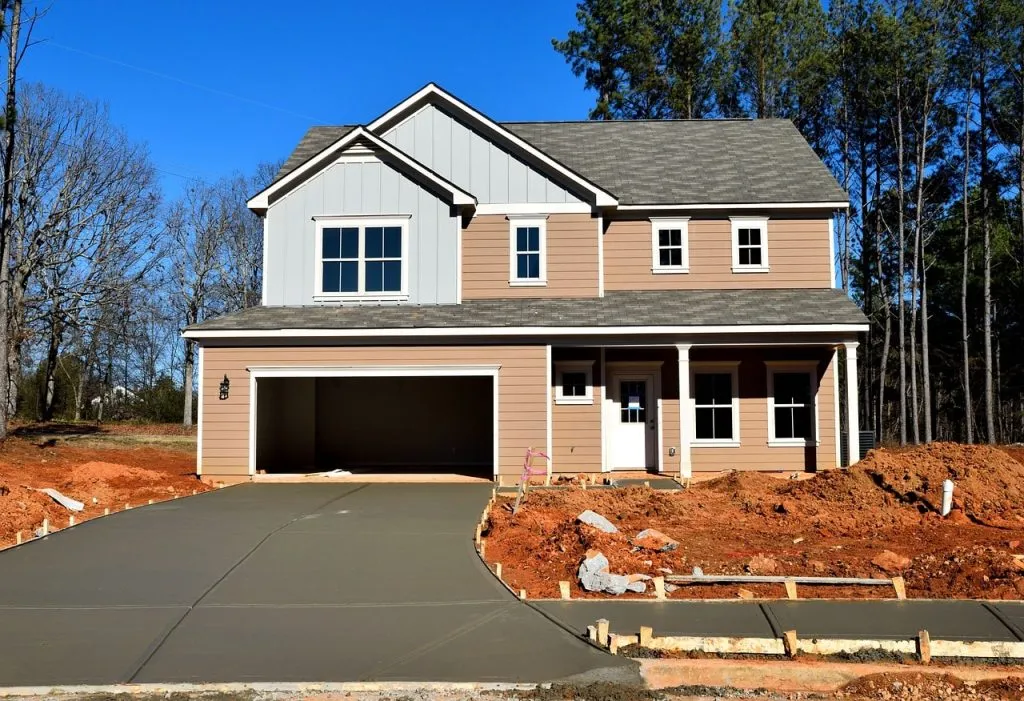
A replacement is also the chance to fix what failed the first time. That means digging out to firm ground, building a compacted base, setting the slope to shed water, and adding drainage where water has been collecting. Our concrete driveway page explains what a full installation involves.
Do Not Ignore the Water
In Austin, water is behind a large share of driveway failures. Heavy downpours on clay soil that drains slowly can soak the ground under a slab, then the long dry summer pulls that moisture back out. Roof runoff aimed at the driveway, a yard that slopes toward it, or a low spot at the bottom of the slab all speed this up.
If water is part of the problem, fix it with the driveway, not after. A repaired or new slab on ground that keeps getting soaked will fail the same way the old one did. Our driveway drainage service covers channel drains, regrading and other ways to move that water.
How the Costs Compare
There is no single price for any of these, because the size of the driveway, the access, the amount of removal and the finish all change the number. In relative terms:
- Repair is the lowest cost, and its value depends on whether the base will hold.
- Resurfacing costs more than a repair and less than replacement, with no demolition and less downtime.
- Replacement costs the most, because it includes tearing out and hauling away the old slab, but it is the only option that resets the base.
For the factors that drive a full driveway price, see our guide to concrete driveway cost in Austin.
Frequently Asked Questions
Is it cheaper to repair or replace a concrete driveway?
A targeted repair almost always costs less up front than replacement. It stops being the cheaper choice when the base has failed, because you end up paying for repairs that keep coming back. If more than a few sections are sunken, heaved or broken, replacement is often the better value.
Can you resurface a driveway that has cracks?
Yes, if the cracks are narrow and the slab is still stable. Cracks are cleaned and repaired before the overlay goes down. An overlay will not fix cracks caused by a moving or failed base, and those cracks usually come back through the new surface.
How long does a concrete driveway last in Austin?
A well-built concrete driveway commonly lasts several decades. In Austin, base preparation and drainage decide most of that, because expansive clay soil and heavy rain are what usually shorten a driveway’s life.
Can I replace only part of my driveway?
Yes. Driveways are poured in sections separated by joints, and a badly damaged section can be cut out and re-poured on its own. The new section will be a slightly different color from the old ones at first.
Get an Honest Look at Your Driveway
Before you pay for any option, have someone check the base, not just the surface. Ask them to tell you which sections are moving, where the water is going, and whether a repair will last. If you are in the Austin area and want that assessment, call us at (512) 710-1772 and we’ll tell you plainly whether your driveway needs a repair, an overlay or a new slab.