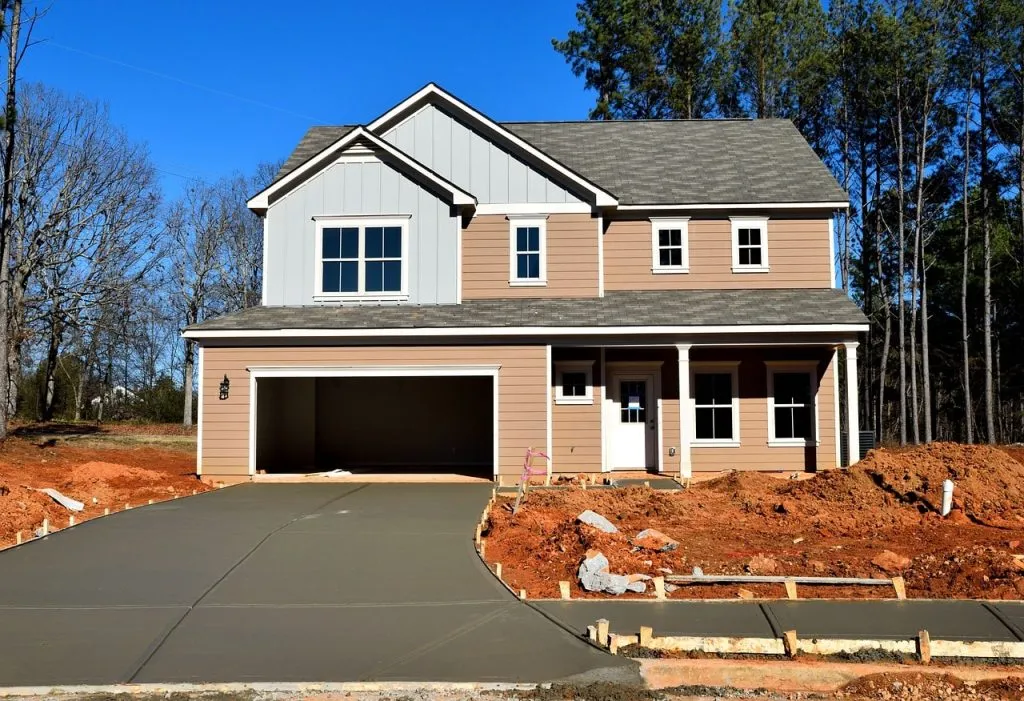
Yes, you can extend or widen an existing concrete driveway, and a well-built extension can last as long as the original slab. What decides that is a properly compacted base, a planned joint where new concrete meets old, and drainage that sends water away from both slabs. In Austin, check two things before anyone pours: your driveway counts toward your lot’s impervious cover limit, and any work on the approach in the public right-of-way needs a city permit pulled by a licensed contractor.
Why Homeowners in Austin Extend a Driveway
Most extensions start with a parking problem. A second or third car ends up on the lawn, a boat or trailer needs a hard pad, or the original single-car driveway is too narrow to open doors without stepping into the grass.
Other common reasons are a side pad that leads to a backyard gate, a turnaround so you don’t back into a busy street, or a wider apron where tires keep chewing up the edge of the yard. Each of these is a different project, so be clear about what the new concrete needs to carry. A pad for a bass boat on a trailer needs more than a strip for a commuter car.
How Does New Concrete Attach to an Old Driveway?
New concrete does not bond to cured concrete on its own. The two slabs will always be separate pieces, so the real question is how they are joined. There are three common approaches.
| Joint method | What it is | Best for | Trade-off |
|---|---|---|---|
| Isolation joint | A strip of joint filler between the slabs, so each moves on its own | Pads that won’t see much traffic across the joint | Slabs can drift out of level over time |
| Doweled joint | Steel dowels drilled and epoxied into the old slab edge, with new concrete poured around them | Extensions you drive across every day | More labor, and the old edge must be sound |
| Saw-cut and re-pour | The damaged old edge is cut back to solid concrete before the new pour | Old slabs with broken or crumbling edges | Removes some of the existing driveway |
On Austin’s clay soils, the doweled joint is usually the better choice for anything you drive on. The dowels let the slabs move lengthwise but help stop one from rising or dropping against the other, which is what creates a trip edge or a bump you feel every time you pull in.
Why the Base Matters More on Austin Soil
Much of the Austin area, especially the east side and the Blackland Prairie suburbs, sits on expansive clay that swells when it is wet and shrinks when it dries. West of the Balcones Escarpment, many lots have thin soil over limestone instead. Your own lot can differ from its neighbors, so the base should be built for what is actually under the grass.
A typical extension starts by digging out the sod and the organic topsoil, then placing and compacting a crushed stone base, often around 4 inches deep. Pouring directly on soft topsoil or grass is the most common shortcut and the most common reason an extension settles or cracks in its first few years.
The slab itself is typically about 4 inches thick for passenger cars, with steel reinforcement. If the new section will hold a trailer, RV or work truck, it is usually poured thicker. Watch for tree roots too. A large live oak near the new edge can lift or crack a slab, and cutting major roots can harm the tree.
Will the New Section Match the Old Driveway?
Not exactly. Fresh concrete is darker and more uniform than a slab that has spent years in the Texas sun, and even the same mix poured years apart rarely matches. The color difference fades with time, but it seldom disappears.
You have a few ways to handle it:
- Accept the difference. On a side pad, most people stop noticing within a year or two.
- Make it a design choice. A stamped concrete border or a paver band between old and new turns the seam into a feature.
- Resurface everything. A thin overlay over both slabs gives one uniform surface. Our page on concrete resurfacing explains when an overlay makes sense.
If you are weighing a paver section instead of concrete, our comparison of concrete vs pavers for Austin driveways covers cost, repairs and curb appeal.
Permits and Limits to Check Before You Pour
This is the part homeowners most often skip, and it is the part that can force you to tear out new concrete.
Impervious cover. Inside Austin city limits, a driveway is impervious cover, and most single-family zones (SF-2 and SF-3) cap impervious cover at 45% of the lot. Your house, garage, existing driveway, patios and other hard surfaces all count toward that number. Some lots and zones have different limits, so check your property’s zoning before you design the extension.
Work in the right-of-way. The strip between your property line and the street, including the driveway approach and curb, belongs to the public right-of-way. The City of Austin requires a Driveway/Sidewalk permit for driveway, sidewalk, curb or gutter work there, and that work must be done by a contractor holding a right-of-way contractor’s license. If your extension widens the approach or adds a curb cut, it falls under this rule.
Outside city limits. Pflugerville, Round Rock, Cedar Park and the unincorporated parts of the county set their own rules. Call the city or county before you start.
HOA rules. Many Austin-area subdivisions require architectural approval for driveway changes. It is far easier to get that letter before the pour than after.
Before any digging, have underground utilities located through 811 so nobody hits a gas or water line.
Plan the Drainage Along With the Concrete
A wider driveway sheds more water, and in an Austin downpour that water has to go somewhere. If the extension slopes toward the house, or dams water against the old slab, you can end up with pooling, soft soil under the edges and cracks that follow.
The new section should slope away from the house and toward the street or a planned drain, commonly at around 1/8 to 1/4 inch of fall per foot. If the yard already holds water near the driveway, fix that first. A channel drain across the low end or some regrading is usually cheaper than repairing a slab that sank. See our driveway drainage and land grading services for what that work involves.
What Changes the Cost of an Extension
Every extension is priced on its own conditions, so a fair quote follows a site visit. The biggest factors are:
- Square footage and slab thickness
- How much soil, sod or old material has to be removed
- Access for the concrete truck or pump
- Dowels, saw cuts or edge repair on the old slab
- Finish (broom, stamped, colored or exposed aggregate)
- Approach work and permits in the right-of-way
- Any drainage or grading fixes
For how these factors play out on a full driveway, see our guide to concrete driveway cost in Austin.
Frequently Asked Questions
Do I need a permit to extend my driveway in Austin?
Any driveway, sidewalk, curb or gutter work in the public right-of-way inside Austin city limits needs a Driveway/Sidewalk permit, and only a licensed right-of-way contractor can do that work. For the part on your own lot, check with the city before you design it, because the driveway counts toward your lot’s impervious cover limit. Outside city limits, ask your own city or the county.
Will the new concrete crack where it meets the old driveway?
A properly built extension has a planned joint where the two slabs meet, so any movement happens at that line instead of as a random crack. Dowels drilled into the old slab help keep the two surfaces level with each other as the ground moves.
How thick should a driveway extension be?
For passenger cars, a typical residential driveway slab is about 4 inches thick over a compacted base. If the extension will carry a trailer, RV or work truck, it is usually poured thicker, around 5 to 6 inches. Matching the existing slab’s thickness is the usual starting point.
Can I use pavers or gravel for the extension instead of concrete?
Yes. Pavers can make a deliberate contrast band that hides the color difference, and gravel is the lowest-cost way to add a parking pad. Both have trade-offs in upkeep, and you should still check how the city treats the surface for impervious cover before you build.
Plan Your Extension
Start with what the new space has to carry and where its water will go, then check your lot’s impervious cover and whether the approach is involved. If you want a contractor to look at the old slab, the soil and the slope before you commit, call us at (512) 710-1772 and we’ll walk the site and give you a written estimate for the extension.